Bottle Showcase
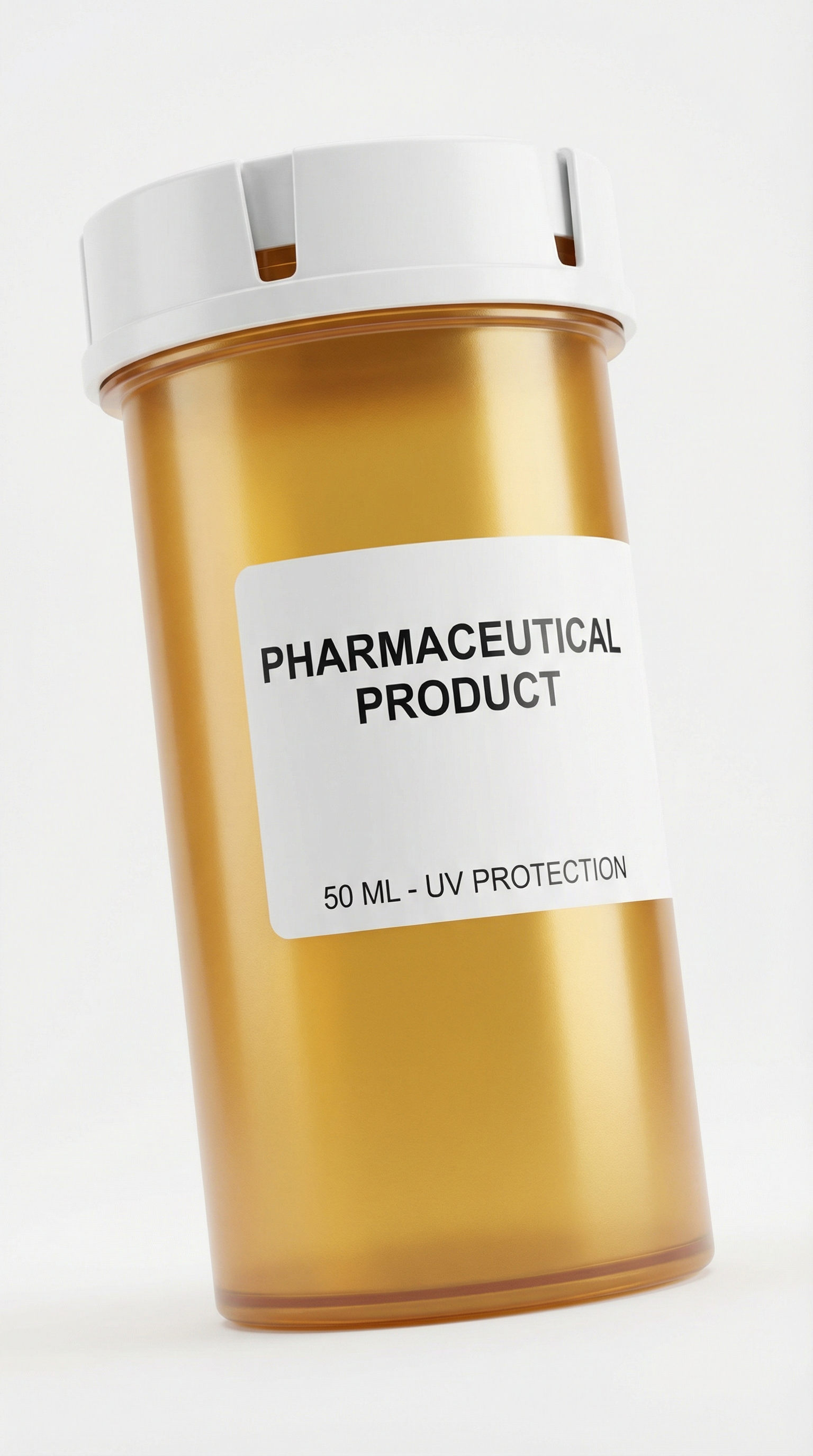
Discover how our amber bottles protect pharmaceutical products
UV Protection
99%
Below 450nm
Light Blocking
450nm
Cutoff wavelength
Moisture Barrier
Low
Permeability
Heat Resistance
160°C
Melting point
Interactive Light Spectrum Visualization
Adjust the wavelength to see how amber bottles block different types of light
500 nm
Green
350nm (UV)450nm (Cutoff)700nm (Red)
500nm
Light Transmission
90.0%
Limited protection - light passes through
Protection Level
10.0%
Visible light partially transmitted
How Amber Bottles Work
The amber color in our polypropylene bottles comes from iron oxide pigments that absorb UV and short-wavelength visible light (below 450nm). This is the range where most photodegradation of pharmaceutical compounds occurs.
Current wavelength (500nm): This is in the visible light range. While some light passes through (allowing you to see the contents), the amber color still provides protection against the most harmful wavelengths below 450nm.
Material Properties
Why polypropylene is ideal for pharmaceutical packaging
Physical Properties
- • Density: 0.90-0.91 g/cm³ (lightweight)
- • Melting point: 160-165°C (heat resistant)
- • Tensile strength: 30-40 MPa (durable)
- • Impact resistance: Excellent at room temperature
- • Transparency: Translucent amber color
Chemical Properties
- • Chemical resistance: Excellent to most pharmaceuticals
- • Moisture barrier: Low water vapor permeability
- • Oxygen barrier: Moderate (suitable for most drugs)
- • Sterilization: Compatible with gamma radiation
- • Extractables: Minimal leaching into contents